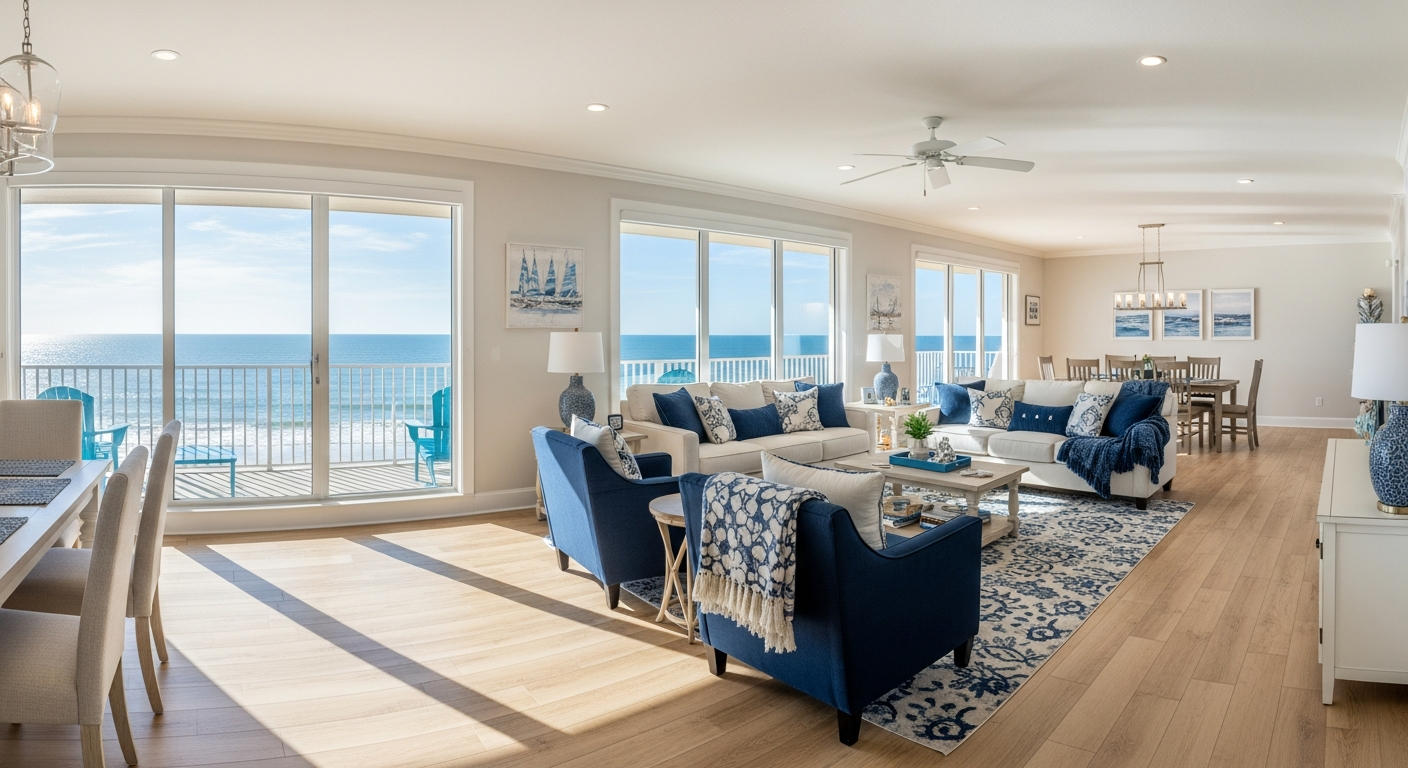
Why More Daytona Vacation Rentals Hasn't Hurt Revenue
Daytona Beach vacation rental supply jumped roughly 80% over the past year, yet nightly rates and revenue keep climbing. Here's what Volusia County landlords should make of it.
If you own a rental in Volusia County and you've been watching the Daytona vacation rental market, you've probably heard the same warning from a half-dozen sources: too many units coming online, demand can't keep up, the party is over.
The data tells a different story. According to AirROI's most recent Daytona Beach short-term rental report, available STR listings are up roughly 80% year over year — a genuinely massive surge. And yet nightly rates and total host revenue are both still trending upward. That's a counterintuitive combination, and it's worth understanding before you make any big decisions about your Volusia property.
What's Actually Happening in Daytona Vacation Rentals
A flood of new supply usually crushes prices. It hasn't here. The simplest explanation is that demand for Daytona Beach short-term rentals has been outpacing supply for years — speedweeks, biketoberfest, race weekends, spring break, and the steady drumbeat of beach vacationers from the Southeast. The market had room to absorb a lot of new units before pricing pressure kicked in.
Two other factors are working in landlords' favor. Inventory of homes for sale in the Daytona area is up sharply — listings have climbed about 45% since 2025 according to local market data — and average days-on-market has stretched to roughly 93 days. That's softening the purchase side of the market, not the rental side. Landlords who already own are still in a strong position; new investors are finding it easier to acquire properties than they have in years.
Long-term rents have softened a touch. Median asking rent in Daytona Beach is sitting around $1,595, slightly below where it was a year ago, per Apartment List's monthly rent report. So the spread between what you'd earn on a long-term lease versus a well-managed STR is, if anything, wider than it was — not narrower.
What This Means If You Already Own a Volusia Rental
If you already have a property in Daytona, Port Orange, Ormond, or anywhere along the Volusia coast, the math hasn't fundamentally changed. Strong vacation demand. Acceptable nightly rates. More competition for guest attention than there was two years ago, but not a collapsed market.
What has changed is that you can no longer coast. New STR operators are bringing professional photos, dynamic pricing software, and tightly managed listings. If your unit is still running on basic Airbnb defaults from 2022, you're going to lose bookings to operators who upgraded their game.
Three things move the needle right now:
- Listing photography. Phone snapshots from three years ago are not going to cut it against neighboring listings shot by professionals.
- Pricing strategy. Static nightly rates leave money on the table during race weeks and waste it on slow Tuesdays in September.
- Reviews maintenance. A 4.7-star property gets booked. A 4.4-star property doesn't.
What This Means If You're Thinking About Buying In
The combination of softer purchase prices and resilient rental demand is the most landlord-friendly setup Volusia has seen in a couple of years. That doesn't mean every property pencils — coastal flood zones, HOA STR restrictions, and Volusia County's evolving short-term rental ordinances all need real diligence.
Before you sign anything, check three things on every potential purchase:
- Is the address legally allowed to operate as a short-term rental? Some HOAs and municipal overlays restrict it; the fines for ignoring the rules are not minor.
- What's the FEMA flood zone designation? Insurance costs in coastal Volusia are nontrivial and have been rising.
- What's the actual rental comp on the block? AirDNA, AirROI, and a quick scan of nearby Airbnb listings will tell you more than any general market report.
If you've been on the fence about adding a Volusia rental to your portfolio, the current window — softer purchase prices, still-strong rental demand — is the most accommodating one you've seen since 2023. It's not 2021 anymore, but it's a much better entry point than the past two years offered.
Long-Term vs. Short-Term: Still a Real Choice
Here's the part most generic articles get wrong: there is no universal answer to "should I run my Daytona property as long-term or short-term." It depends on your tolerance for guest turnover, the property's location, whether you self-manage, and your local STR rules.
Long-term in Volusia gets you stable cash flow at a softer rent number. Short-term gets you higher gross revenue with more volatility, more work, and tighter local regulations. Both still pencil out for the right owner.
Whichever you choose, getting your property in front of qualified renters matters more than ever in a market with growing inventory. For long-term rentals, every FloridaRentalMLS plan — Basic, Standard, or Premium — lists your property on Stellar MLS and syndicates it to Zillow, Realtor.com, and other major rental sites, with MLS-compliant photo formatting and every inquiry forwarded to you with full contact details. The tiers differ mainly in listing length and how many photos you can include; showings, screening, and choosing a tenant stay with you.
For more context on how the broader Florida market is shifting this year, see our Tampa Bay rental market overview, which shares the same softening-but-resilient pattern playing out statewide.
The Bottom Line for Volusia Landlords
The Daytona vacation rental surge is real, and so is the resilient demand absorbing it. If you already own here, focus on operations: photography, pricing software, review management. If you're thinking about buying, the fundamentals are quietly more friendly than they've been in a while — provided you do the legal and insurance diligence upfront.
For long-term landlords, the case is cleaner. Demand is stable, a complete, well-presented listing is what qualified renters respond to, and getting it onto the MLS costs a one-time flat fee rather than a percentage cut to a property manager.
See FloridaRentalMLS plans and pricing — listings go live within 1 business day.
Ready to List on the MLS?
Get your Florida rental in front of thousands of serious tenants on Zillow, Apartments.com, and the Stellar MLS — starting at just $99.
View Pricing →